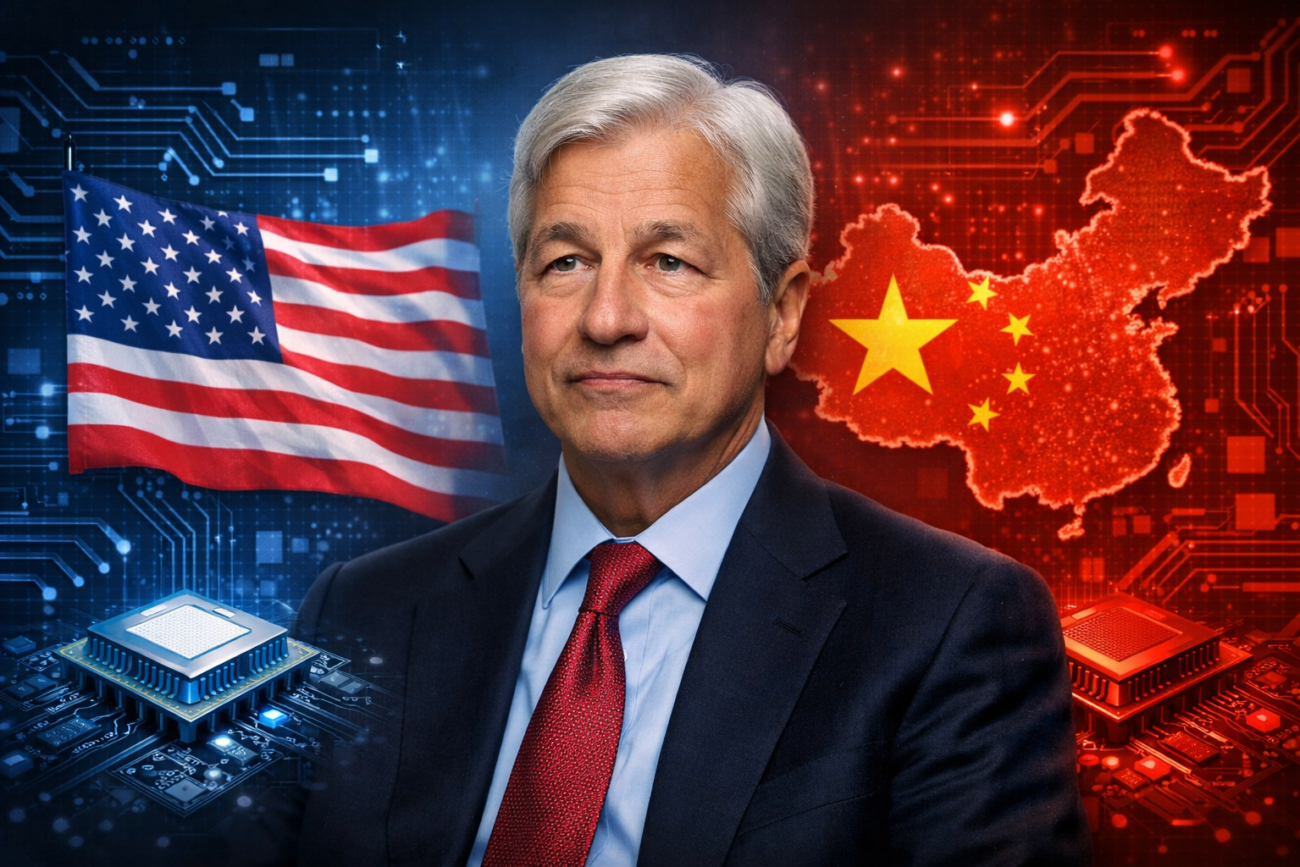
The escalating US China technology competition has captured the attention of global markets, governments, and business leaders. As two of the world’s largest economies, the United States and China are vying for supremacy in sectors ranging from artificial intelligence (AI) and semiconductors to 5G and cloud computing. Jamie Dimon, CEO of JPMorgan Chase, has frequently highlighted the economic and strategic implications of this rivalry, emphasizing both opportunities and risks for investors and corporations worldwide.
The Background of US-China Tech Rivalry
The US China technology competition is rooted in decades of economic growth, innovation, and geopolitical positioning. The United States has historically dominated advanced technology due to its strong research institutions, venture capital ecosystem, and private sector innovation. Companies like Google, Microsoft, and Apple have become global leaders by developing technologies that shape everyday life and business operations.
China, however, has emerged as a formidable competitor. Its government-led initiatives, such as Made in China 2025 and the Digital Silk Road, focus on achieving technological self-sufficiency in key areas like AI, quantum computing, and biotechnology. As a result, China has narrowed the gap in several sectors, compelling the US to reassess its approach to global technological leadership.
Jamie Dimon’s Perspective on the Technology Race
Jamie Dimon, as the head of one of the world’s largest financial institutions, brings a strategic lens to the US China technology competition. Dimon often emphasizes the economic stakes, warning that the rivalry could influence global supply chains, capital flows, and innovation cycles. He notes that both countries must balance national security concerns with the benefits of open markets and international collaboration.
Dimon also stresses the importance of US leadership in maintaining technological competitiveness. He believes investments in infrastructure, education, and research are critical to sustaining innovation. Moreover, Dimon highlights that financial institutions have a role to play by funding startups, enabling cross-border collaboration, and assessing geopolitical risks associated with emerging technologies.
Key Sectors in the US-China Technology Competition
1. Artificial Intelligence (AI)
AI represents a central battleground in the US China technology competition. The United States continues to lead in foundational AI research and software innovation, whereas China excels in data-driven applications and government-backed deployment strategies. Dimon has highlighted that companies leveraging AI for financial services, healthcare, and logistics could determine which nation gains long-term technological advantage.
2. Semiconductors and Chip Manufacturing
Semiconductors are the backbone of modern technology. The US dominates in high-end chip design, while China has rapidly expanded its domestic production capabilities. Supply chain disruptions and export restrictions have made semiconductor strategy a geopolitical concern. Dimon’s insights suggest that investment in semiconductor innovation and resilient supply chains will be crucial for sustaining global competitiveness.
3. 5G and Telecommunications
Telecommunications infrastructure, particularly 5G networks, is another strategic focus. US companies like Qualcomm and Cisco are developing critical technologies, while Chinese firms such as Huawei have aggressively expanded globally. Dimon has noted that leadership in 5G not only drives economic growth but also provides strategic leverage in emerging technologies and cybersecurity.
4. Cloud Computing and Quantum Technologies
The competition extends to cloud computing and quantum computing. US tech giants dominate cloud infrastructure, but China has invested heavily in quantum research and supercomputing. Dimon emphasizes that breakthroughs in these areas could reshape finance, healthcare, and national defense, underscoring the stakes of this technological rivalry.
Implications for Global Business
The US China technology competition affects multinational corporations, investors, and emerging startups. Companies face challenges navigating export controls, regulatory restrictions, and intellectual property protections in both markets. Dimon stresses that understanding geopolitical risks and maintaining diversified supply chains are essential strategies for businesses operating in this environment.
Financial markets are equally impacted. Technology stocks, venture capital flows, and international trade are sensitive to policy shifts between the US and China. Dimon warns that volatility is likely, but strategic investment in innovation-driven sectors offers potential for substantial returns.
The Role of Government Policy
Government policy plays a pivotal role in shaping the US China technology competition. The US has implemented measures such as investment screening, export controls, and research funding to maintain technological leadership. China, on the other hand, provides subsidies, strategic planning, and regulatory support to accelerate domestic innovation. Dimon highlights that understanding these policy frameworks is vital for investors, corporations, and policymakers seeking to navigate this complex landscape.
Future Outlook of the Technology Rivalry
The future of the US China technology competition is expected to be defined by innovation, resilience, and strategic foresight. Experts, including Jamie Dimon, believe that collaboration and competition will coexist. Areas such as climate technology, healthcare, and space exploration may see joint efforts, while critical sectors like AI and semiconductors will remain competitive.
Dimon predicts that companies investing in research, infrastructure, and global partnerships will be better positioned to benefit from technological advancements. Additionally, policymakers must consider how to balance national security with economic growth to avoid stifling innovation.
Strategic Recommendations from Jamie Dimon
-
Invest in Domestic Innovation: Supporting R&D and education ensures sustained competitiveness in high-tech sectors.
-
Diversify Supply Chains: Reducing dependency on a single country mitigates geopolitical risks.
-
Promote Public-Private Collaboration: Partnerships between governments and corporations can accelerate innovation.
-
Monitor Regulatory Changes: Staying informed about trade restrictions and export controls is crucial for strategic planning.
-
Focus on Emerging Technologies: AI, quantum computing, and biotechnology are key areas that will shape the next decade.
Conclusion
The US China technology competition, as highlighted by Jamie Dimon, is a defining feature of the 21st-century global economy. It shapes markets, innovation, and geopolitics, presenting both risks and opportunities. Companies, investors, and governments must adopt strategic approaches to navigate this rivalry, balancing collaboration and competition while investing in the technologies of the future. Dimon’s insights serve as a roadmap for understanding the economic and strategic implications of this ongoing contest for technological supremacy.
FAQs About US-China Technology Competition
Q1: What is the US China technology competition?
A: It is the strategic rivalry between the US and China over advanced technologies like AI, semiconductors, 5G, and quantum computing.
Q2: Why is Jamie Dimon concerned about this competition?
A: As CEO of JPMorgan Chase, Dimon focuses on how the rivalry affects global markets, investments, and innovation.
Q3: Which sectors are most affected by this competition?
A: AI, semiconductors, 5G, cloud computing, and quantum technologies are key sectors in the rivalry.
Q4: How does government policy influence the competition?
A: Policies such as subsidies, export controls, and research funding shape the innovation capabilities and strategic advantages of both countries.
Q5: What strategies does Dimon recommend for businesses?
A: He advises investing in R&D, diversifying supply chains, fostering public-private partnerships, and focusing on emerging technologies.