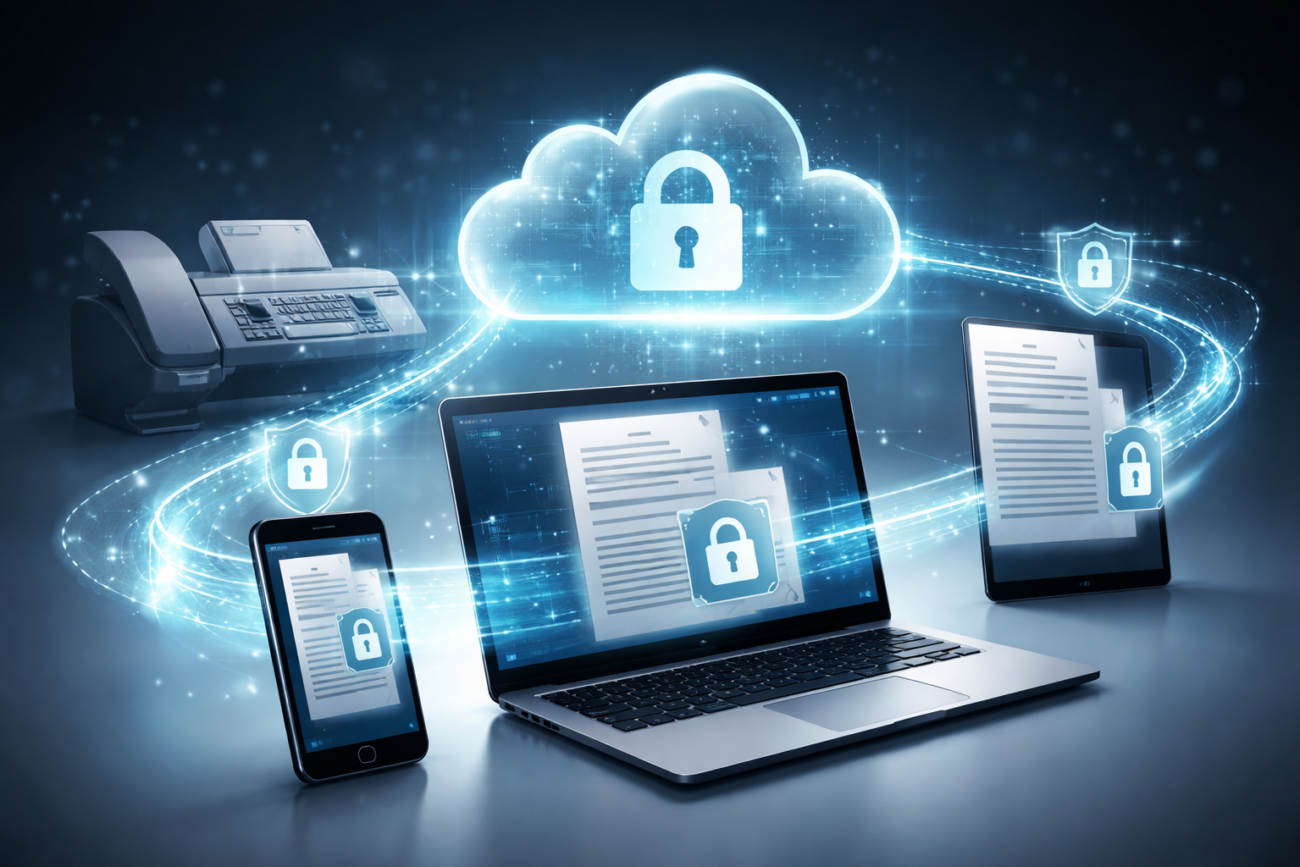
In an era where cyber threats are escalating, protecting corporate documents has become a chief concern for businesses. One overlooked avenue of vulnerability is the traditional fax machine, which, despite its age, is still widely used and can pose significant risks. Shifting to a digital transmission method can offer enhanced security along with many other advantages.
Organizations that recognize these risks are increasingly turning to digital solutions to improve their document security. Below, you will find a discussion on online faxing services and how they offer a more secure way to handle sensitive data transmission.
Exploring Online Faxing as a Secure Document Transmission Method
 Online faxing promises a higher level of security compared to traditional fax methods, primarily because it leverages advanced encryption measures. When data is transferred over the internet, encryption acts like a coded shield, ensuring that only the intended recipient with the correct decryption key can access the information.
For companies considering the switch, online faxing researching potential providers’ encryption standards and compliance certifications is a fundamental first step. It’s advisable to select a service that not only meets current security demands but also keeps abreast of evolving threats and countermeasures.
Enhancing Confidentiality with Internet Fax Services
Confidentiality is paramount in any business communication, and internet fax services offer several layers of protection to preserve it. A central feature is the ability to restrict access both at the user and document levels, ensuring that only authorized personnel handle sensitive information.
Unlike traditional fax machines that can leave sensitive documents lying around for anyone to see, online faxing often incorporates a secure, cloud-based repository where faxes are stored safely and can be retrieved only by authorized users. This reduces the risk of information leaks or inadvertent exposure caused by unattended documents at a machine.
To capitalize on these confidentiality features, organizations should establish clear policies and protocols for who has access to the online fax system and how the documents are managed post-transmission. Implementing a strong access control and document management policy will go a long way in protecting confidential information.
Overcoming Traditional Fax Vulnerabilities Through Digital Solutions
Traditional fax machines are susceptible to several kinds of vulnerabilities—ranging from physical theft of the machine or paper documents to interception of unencrypted signals. Online faxing addresses these issues by eliminating the need for physical paper and providing secure digital transmission paths.
Furthermore, many digital faxing services offer activity tracking and detailed logs of sent and received documents, which can be crucial for auditing and ensuring security. If a potential security breach occurs, these logs can be invaluable in pinpointing the breakdown and taking corrective action.
Businesses should prioritize services that feature secure data transmission and offer comprehensive tracking and logging capabilities. This not only secures fax transmission but also fortifies the organization’s overall cybersecurity framework, as part of a comprehensive security strategy.
Implementing Online Faxing to Safeguard Sensitive Information

For businesses aiming to safeguard sensitive information, implementing an online fax service can be a game-changer. Not only does it offer enhanced security, but it also brings improved efficiency and convenience to business communications.
An online fax service enables companies to send and receive faxes directly from computers or mobile devices, bypassing the need for outdated hardware. This transition fosters a more controlled environment for handling sensitive data and aligns with the mobile-first workstyle prevalent in many industries today. The integration of online faxing within digital transformation strategies is also a stepping stone towards streamlined operations.
When deploying an online fax service, conducting a thorough risk assessment and implementing additional layers of security, such as multi-factor authentication, can further enhance data protection. It’s also critical to provide employees with training on best practices to ensure that they understand the risks and measures to counteract them.
Ultimately, swapping traditional fax machines for an online faxing solution is more than a technological upgrade; it’s a strategic move to fortify document security. By embracing this modern approach, businesses not only respond to the imminent threats of today’s landscape but also prepare themselves for the evolving challenges of tomorrow, all while ensuring regulatory compliance and the safe handling of confidential data.