Introduction
A scheme information document (SID) is one of the most important documents for anyone considering investing in mutual funds or structured financial schemes. It serves as a comprehensive disclosure that explains how a scheme operates, its objectives, risks, fees, and the rights of investors. For transactional intent users—such as those comparing funds before investing—the SID is essential because it provides the factual basis needed to make informed financial decisions. Regulatory bodies like Securities and Exchange Board of India and U.S. Securities and Exchange Commission mandate detailed disclosures to ensure transparency and protect investors from misleading information. Understanding how to read and interpret a scheme information document can significantly improve your investment outcomes and reduce unexpected risks.
What Is Scheme Information Document?
A scheme information document is an official legal document issued by a mutual fund or investment scheme that contains detailed information about the scheme’s structure, investment strategy, asset allocation, risk factors, fees, and operational processes. It is designed to give investors a clear picture of how their money will be managed and what they can expect in terms of returns and risks. Unlike marketing brochures, the SID is legally binding and must comply with regulatory standards, making it a reliable source of truth. Investors are encouraged to review the SID before committing funds because it outlines critical elements such as investment objectives, benchmark indices, and redemption procedures.
Purpose of a Scheme Information Document
The primary purpose of a scheme information document is to ensure transparency between the fund house and investors. It helps potential investors understand the nature of the scheme, whether it aligns with their financial goals, and what level of risk they are taking on. By clearly outlining the investment philosophy and operational framework, the SID reduces information asymmetry and builds trust. Additionally, it acts as a reference document that investors can consult throughout the life of their investment to track whether the fund is operating as promised.
Key Components of a Scheme Information Document
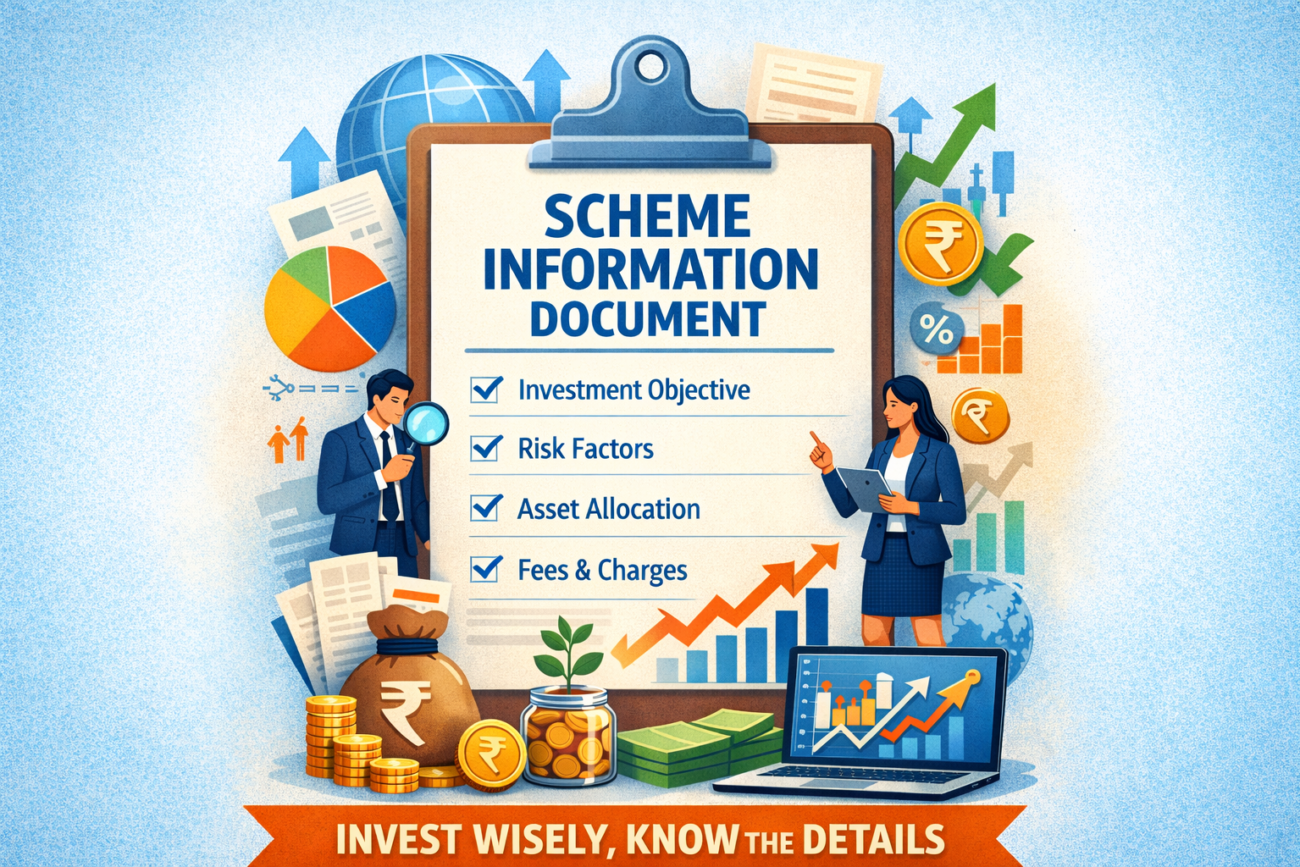
Investment Objective
This section explains the goal of the scheme, such as capital appreciation, income generation, or balanced growth. It helps investors determine whether the scheme fits their investment strategy.
Asset Allocation
The SID specifies how the fund’s assets will be distributed across different securities like equities, bonds, or money market instruments. This allocation provides insight into the scheme’s risk profile and expected volatility.
Risk Factors
Every investment carries risk, and the SID lists potential risks including market risk, credit risk, liquidity risk, and interest rate fluctuations. Understanding these risks allows investors to prepare for possible downturns.
Fees and Expenses
This section details expense ratios, management fees, entry or exit loads, and other costs associated with the scheme. Knowing the cost structure helps investors estimate net returns.
Fund Management Team
Information about the fund manager’s experience and track record is included to give investors confidence in the scheme’s leadership.
Investment Strategy
The document outlines how the fund intends to achieve its objectives, including stock selection methods, sector focus, and diversification approach.
Redemption and Subscription Process
Clear instructions are provided on how investors can buy or redeem units, along with timelines and conditions.
Why Investors Should Read the SID Before Investing
Reading the scheme information document before investing is crucial because it helps you avoid surprises. Many investors focus only on past performance, but the SID reveals the underlying strategy and risks that drive performance. It also clarifies terms such as lock-in periods, exit penalties, and tax implications. By reviewing the SID, investors can compare multiple schemes objectively and choose the one that best aligns with their financial goals and risk tolerance.
How to Analyze a Scheme Information Document Effectively
Start by reviewing the investment objective to ensure it matches your goals. Next, examine the asset allocation and risk factors to understand potential volatility. Pay close attention to fees, as high expenses can erode returns over time. Look at the fund manager’s experience and the scheme’s benchmark to gauge performance expectations. Finally, read the operational details such as redemption rules to avoid liquidity issues. Taking a systematic approach ensures you extract the most relevant insights from the document.
Common Mistakes Investors Make When Reading SID
One common mistake is skipping the risk section and focusing only on returns. Another is ignoring the expense ratio, which can significantly impact long-term gains. Some investors also overlook changes or updates to the SID, which may alter the scheme’s strategy or risk profile. Relying solely on summaries instead of reading the full document can lead to misunderstandings about how the scheme operates.
Regulatory Importance of Scheme Information Document
Regulators require fund houses to publish and update the scheme information document to maintain transparency and protect investors. The SID must be periodically revised to reflect changes in strategy, fees, or management. This ensures that investors always have access to accurate and current information. Regulatory oversight also means that any misleading or incomplete disclosure can result in penalties for the fund provider, reinforcing accountability.
Benefits of Scheme Information Document for Fund Houses
While the SID primarily protects investors, it also benefits fund houses by establishing credibility and reducing disputes. A well-prepared SID sets clear expectations and minimizes misunderstandings about performance or operations. It also serves as a communication tool that demonstrates the fund’s commitment to transparency and compliance.
Digital Access and Modern Trends
Today, most scheme information documents are available online, making them easily accessible to investors worldwide. Digital formats allow for quick updates and interactive features such as hyperlinks and search functions. As financial technology evolves, SIDs may incorporate more user-friendly formats, including visual summaries and data dashboards, to enhance investor understanding.
How SID Differs From Other Fund Documents
The SID is often confused with documents like the Key Information Memorandum or prospectus. While these provide summaries, the SID offers comprehensive details and legal disclosures. It is the most authoritative document for understanding the scheme’s operations and obligations.
Role of SID in Risk Management
For investors, the SID is a risk management tool because it highlights potential challenges and limitations. By understanding the scheme’s investment approach and risk controls, investors can diversify appropriately and avoid overexposure to certain sectors or asset classes.
Tips for Using SID in Investment Decisions
Always compare SIDs from multiple schemes before investing. Look for consistency between the fund’s stated strategy and its historical performance. Pay attention to updates or addendums that may signal changes in management or investment approach. Consulting a financial advisor alongside reviewing the SID can further enhance decision-making.
Conclusion
A scheme information document is more than just a regulatory requirement—it is a powerful resource that empowers investors to make informed, confident decisions. By carefully reviewing the SID, you gain insight into a scheme’s objectives, risks, costs, and operational framework, enabling you to align investments with your financial goals. Whether you are a new investor or an experienced portfolio manager, understanding the SID is essential for navigating the complex world of investment schemes and maximizing long-term success.
FAQs
1. What is the main purpose of a scheme information document?
The main purpose is to provide detailed, transparent information about an investment scheme so investors can make informed decisions.
2. Is reading the SID mandatory before investing?
It is not legally mandatory for investors, but strongly recommended because it contains critical details about risks and costs.
3. How often is a scheme information document updated?
It is updated periodically or whenever there are significant changes in the scheme’s structure or strategy.
4. Can I access the SID online?
Yes, most fund houses publish the SID on their official websites for easy access.
5. What should I focus on first when reading an SID?
Start with the investment objective, risk factors, and fee structure to quickly understand whether the scheme suits your needs.