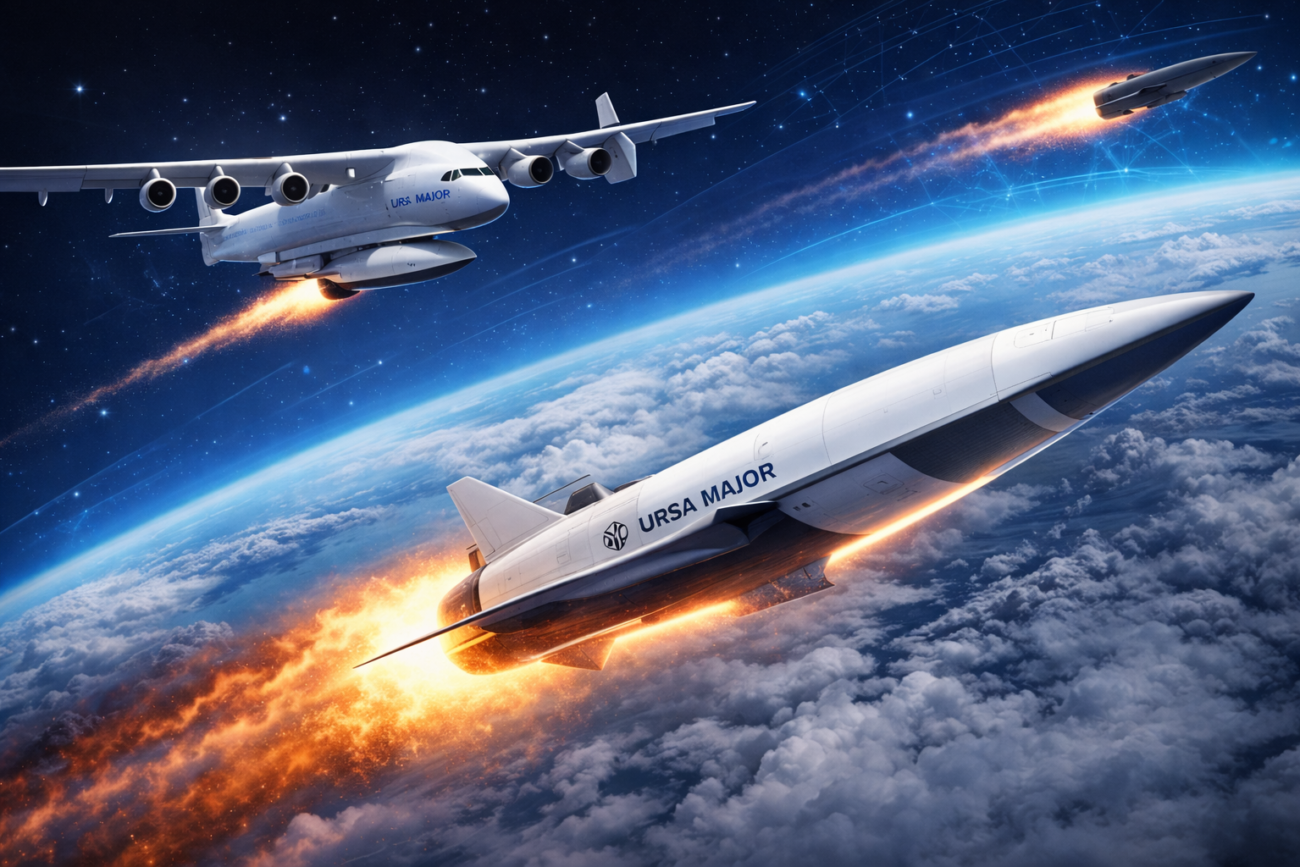
Ursa Major Stratolaunch hypersonic technology represents a significant leap forward in aerospace innovation, combining advanced propulsion systems with next-generation flight testing platforms. This technology focuses on enabling sustained hypersonic speeds, typically defined as Mach 5 and above, while supporting reusable, scalable, and cost-efficient testing solutions. As global interest in hypersonic systems grows, Ursa Major’s collaboration with Stratolaunch has positioned this technology as a critical component in modern aerospace research and defense development.
Overview of Ursa Major and Stratolaunch Collaboration
Ursa Major is known for developing advanced rocket propulsion systems, while Stratolaunch provides a unique air-launch platform designed to support experimental and high-speed flight testing. Together, they form a complementary partnership aimed at accelerating the development of hypersonic technology. Ursa Major Stratolaunch hypersonic technology benefits from combining powerful propulsion engines with a flexible launch architecture that allows testing without reliance on traditional ground-based launch systems.
Purpose of Hypersonic Technology Development
The primary objective of hypersonic technology is to enable faster, more efficient flight for both research and strategic applications. Ursa Major Stratolaunch hypersonic technology is designed to support experimentation in propulsion, materials science, thermal management, and aerodynamic stability under extreme conditions. These capabilities are essential for understanding how vehicles behave at hypersonic speeds over sustained durations.
What Makes Hypersonic Flight Technically Challenging
Hypersonic flight introduces complex challenges that go beyond conventional aerospace engineering. At extreme speeds, vehicles face intense heat, pressure, and aerodynamic forces that require specialized materials and propulsion systems. Ursa Major Stratolaunch hypersonic technology addresses these challenges by focusing on engine efficiency, structural resilience, and controlled flight environments that enable repeatable testing.
Thermal and Structural Considerations
One of the biggest hurdles in hypersonic systems is managing extreme temperatures generated by air friction. Ursa Major Stratolaunch hypersonic technology emphasizes advanced materials and engine designs that can withstand prolonged thermal stress while maintaining performance and safety.
Role of Advanced Propulsion Systems
Propulsion is the core of hypersonic capability, and Ursa Major specializes in developing engines optimized for high-speed regimes. These propulsion systems are engineered to deliver consistent thrust while operating in harsh atmospheric conditions. Within Ursa Major Stratolaunch hypersonic technology, propulsion innovation enables faster testing cycles and more reliable data collection.
Reusability and Cost Efficiency
Unlike traditional experimental systems that are often single-use, this hypersonic technology focuses on reusability. By enabling multiple test flights from the same platform, Ursa Major Stratolaunch hypersonic technology reduces overall development costs and accelerates iteration, which is essential for rapid technological advancement.
Stratolaunch as a Hypersonic Test Platform
Stratolaunch provides a unique airborne launch system that allows hypersonic vehicles to be deployed at high altitude. This approach offers greater flexibility compared to ground-based launches. Ursa Major Stratolaunch hypersonic technology benefits from this capability by enabling controlled launch conditions and broader test profiles.
Advantages of Air-Launch Systems
Air-launch systems reduce atmospheric resistance during initial acceleration and allow precise positioning for test missions. This makes Stratolaunch an ideal platform for hypersonic experimentation, supporting Ursa Major’s goal of advancing propulsion and flight performance data collection.
Applications of Ursa Major Stratolaunch Hypersonic Technology
The applications of this technology span research, defense, and future commercial innovation. Hypersonic systems can support rapid testing of materials, sensors, and propulsion concepts while informing next-generation aerospace designs. Ursa Major Stratolaunch hypersonic technology plays a key role in bridging experimental research and real-world deployment.
Research and Development Use Cases
Researchers use hypersonic testing to study airflow behavior, heat transfer, and vehicle control at extreme speeds. This technology provides a repeatable and adaptable environment for such studies, improving accuracy and reliability of results.
Strategic Importance in Aerospace Innovation
Hypersonic capability is increasingly viewed as a strategic priority in aerospace development. Ursa Major Stratolaunch hypersonic technology contributes to national and industrial innovation by enabling faster experimentation and reduced barriers to entry for advanced flight research.
Supporting Next-Generation Aerospace Systems
Data generated through hypersonic testing informs the design of future aerospace vehicles, including space-access systems and advanced atmospheric platforms. This technology helps engineers validate designs before full-scale production.
Industry Impact and Technological Progress
The broader aerospace industry benefits from advancements in hypersonic testing infrastructure. Ursa Major Stratolaunch hypersonic technology sets new benchmarks for how experimental flight systems are developed, tested, and refined. It also encourages collaboration between private companies, research institutions, and government agencies.
Challenges and Ongoing Development
Despite rapid progress, hypersonic technology remains complex and resource-intensive. Challenges include maintaining vehicle stability, managing heat loads, and ensuring accurate telemetry at extreme speeds. Ursa Major Stratolaunch hypersonic technology continues to evolve to address these issues through iterative testing and engineering refinement.
Future Outlook of Hypersonic Technology
The future of hypersonic development is expected to focus on greater reliability, scalability, and operational flexibility. As testing platforms become more efficient, Ursa Major Stratolaunch hypersonic technology is likely to play an expanding role in shaping next-generation aerospace capabilities. Continued investment and innovation will further enhance its impact.